
Dispelling a Confusion: Hezbut Tawheed and Hizbut Tahrir

Confusion has long persisted between Hezbut Tawheed and Hizbut
Tahrir, two separate organizations whose names share a partial
similarity but whose origins, nature, and methods are fundamentally
different.
Hezbut Tawheed is a non-political religious reform movement
founded in Bangladesh in 1995, in Korotia, Tangail, by Mohammad
Bayazid Khan Panni. Our work is focused in Bangladesh, and we
conduct our activities through peaceful means while remaining within
state law. Hizbut Tahrir, on the other han, was founded in Jerusalem
and operates as an international Islamic party. Its activities were
banned in Bangladesh in 2009.
Because of this confusion in names, our members have repeatedly
been subjected to harassment and suspicion intended for Hizbut
Tahrir. This confusion did not arise naturally. Since we speak about
Islam, media outlets that promote Islamophobia quickly began treating
Hezbut Tawheed with suspicion. Soon after the movement was
established, groups opposed to us started spreading disinformation
to obstruct our activities. They deliberately linked Hezbut Tawheed
with banned militant organizations and reported on us in that light.
As a result, unfounded suspicion spread among the public. Large
numbers of people began to view Hezbut Tawheed negatively.
Wherever our outreach activities were carried out, members involved
in those efforts faced attacks and legal cases at the same time. After
Hizbut Tahrir was banned in 2009, Islamophobic media found an
opportunity to intensify this confusion by repeatedly mixing and
blurring the identities of the two organizations.
Evidence Archive of Attacks and Disinformation Against Hezbut Tawheed
In Arabic, the word hizb simply means “group” or “party.” The presence
of this word in an organization’s name is therefore not unusual. The
Qur’an itself uses the terms Hizbullah (the party of Allah) and Hizb al
Shaytan (the party of Satan). This linguistic overlap was deliberately
exploited to mislead the public and the authorities. By emphasizing
the partial similarity in names, disinformation campaigns blurred the
distinction between two entirely separate organizations.
As a result, many people came to believe that Hezbut Tawheed and
Hizbut Tahrir were the same. In some cases, reports were circulated
claiming that, after Hizbut Tahrir was banned, its members joined
Hezbut Tawheed to avoid detection. This claim was entirely false.
The consequences of this disinformation were severe. In many parts
of the country, members of Hezbut Tawheed were detained by law
enforcement agencies on suspicion of belonging to Hizbut Tahrir. In
some cases, after inquiries were made at higher administrative levels,
it became clear that the detainees had no connection to any banned
organization, and they were released. In most cases, however, formal
cases were filed, and legal proceedings began by treating them as
members of a prohibited militant organization.
As a result, many members were subjected to police mistreatment
and prolonged harassment through colonial-era judicial procedures.
Explaining repeatedly that the two organizations are entirely
separate—with different founders, different objectives, and different
methods—took months and, in some cases, years. During this time,
many members were imprisoned without having committed any
offense.
This confusion persisted not because the differences between the two
organizations were unclear, but because of negligence in verifying
facts and collecting accurate information. Only after Hezbut Tawheed
began organizing large-scale public gatherings across the country
against militancy, communalism, unethical politics, and the misuse of
religion—and began publishing and distributing its own materials—
did the effects of earlier disinformation start to fade from public
perception. Even so, the confusion created by years of misleading
narratives has not yet been fully resolved.
| No | Category | Hezbut Tawheed | Hizbut Tahrir |
| 1 | Legal Status | Not banned by the Government of Bangladesh or any state authority. Publications of Hezbut Tawheed are recognized by the Ministry of Cultural Affairs of Bangladesh as internationally standard ISBN-registered books. |
Banned by the Government of Bangladesh on October 22, 2009. Its activities are also banned in approximately 22 other countries. (Source: Daily Bangladesh Pratidin, January 25, 2012) |
| 2 | Founder | Mohammad Bayazid Khan Panni, a descendant of the esteemed Panni family of Tangail, Bangladesh. |
Sheikh Muhammad Taqiuddin bin Ibrahim bin Mustafa bin Ismail bin Yusuf al-Nabhani, a citizen of Palestine. |
| 3 | Place of Establishment |
Founded in Korotia, Tangail District, Bangladesh. A Bangladesh-centered movement. |
Founded in Jerusalem (then Palestine). An international organization reported to operate in more than 50 countries. |
| 4 | Year of Establishment |
Established in 1995. The movement has been active for 31 years. |
Established in 1953. The organization has been active for 72 years. |
| 5 | Nature and Method |
A completely non-political religious reform movement. Operates peacefully while adhering to state law. Focuses on calling toward Allah’s sovereignty and reforming distortions in Islamic interpretation and practice. Does not engage in elections, strikes, blockades, vandalism, or other conventional political activities. Not affiliated with any political or non-political party. |
Reportedly engages in issue-based movements and political activities such as marches, blockades, and protest programs. |
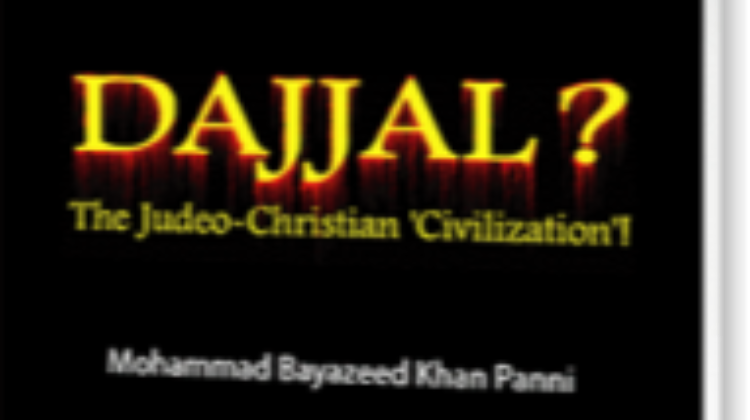
Images Related to this Post









Leave a Comment