
Roadmap for Establishing Human Rights and Freedom of Speech
Category :
Islamic Thought & Analysis

Dr. Mahbub Alam Mahfuz
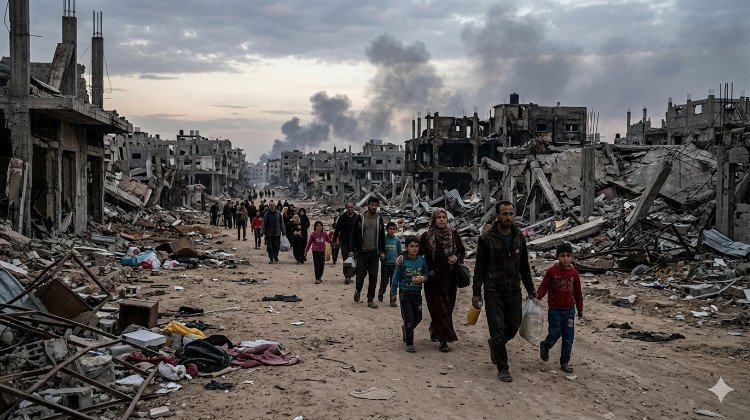
Whether currently developed or underdeveloped—an extreme instability prevails across the entire world. Powerful states are dominating, attacking, and occupying weaker ones; while within states, violence is ongoing over power, political differences, and various religious issues. It is as if a demonic festival of human rights violations and suppression of free speech is taking place worldwide. The Secretary-General of the United Nations, António Guterres, acknowledged on the Palestine issue in 2023 that, "Human rights are facing a severe challenge globally, and the failure of the global system to protect human rights has become clear."
Whether currently developed or underdeveloped—an extreme instability prevails across the entire world. Powerful states are dominating, attacking, and occupying weaker ones; while within states, violence is ongoing over power, political differences, and various religious issues. It is as if a demonic festival of human rights violations and suppression of free speech is taking place worldwide. The Secretary-General of the United Nations, António Guterres, acknowledged on the Palestine issue in 2023 that, "Human rights are facing a severe challenge globally, and the failure of the global system to protect human rights has become clear."
It has been almost eighty years since the British left. In 55 years of independence, there have been numerous movements, coups, changes of government, revolutions, and constitutional reforms—but human rights, freedom of speech, and justice for the people have not been ensured. Millions of cases are hanging in the courts; people are wandering from door to door in hope of justice, yet they are not getting it. From the remote areas of Bangladesh to the Parliament and the Secretariat, mob violence is constantly happening everywhere. People's lives are endangered due to political differences. The majority is oppressing religious and ideological minorities.
But such a situation cannot continue indefinitely. The Great Creator, Allah, has created this being named human as His Khalifah or representative. Therefore, human beings themselves must resolve this situation. Thoughtful circles are thinking and researching from an intellectual standpoint, much discussion is taking place, but no shore or solution is being found. We want to say that there is a way out of this situation. If we can discard man-made systems and unite upon one consciousness—that we are all creations of the One Allah, children of one father and mother, one family—then peace can come to our society solely through obedience to Allah. If we can establish the way of life given by Allah, then this violation of human rights will stop, and the suppression of free speech will cease.
The root cause of human rights violations is extremism. If we look at the ancient age, the Middle Ages, and the modern age, we will see that among almost all major religions currently existing in the world, various extremist groups have emerged within their followers. However, it is not just in the name of religion; various terrorist activities are ongoing worldwide centered around different political ideologies like democracy, socialism, nationalism, etc. But the crisis here has become extremism in the name of Islam.
Today, in the Western civilization and media, including Europe, our holy religion Islam is being presented as the source of extremism. For example, the names of some organizations formed in Central Asia and the Arab region like Al-Qaeda, Islamic State, Taliban, Lashkar-e-Taiba, Africa's Al-Shabaab, Boko Haram, etc., are mentioned. In reality, there is a political reality behind the rise of these extremist groups. A few hundred years ago, European powers subjugated the entire Muslim world through military force, divided it into various regions, and ruled and exploited them in the name of gifting an 'advanced human civilization'. Later, they themselves killed about 150 million people through two World Wars. Although various countries gained independence after the Second World War, their political instability, internal conflicts, chaos in governance structures, and economic weakness remained. At the same time, the interference of former masters and superpower states continued.
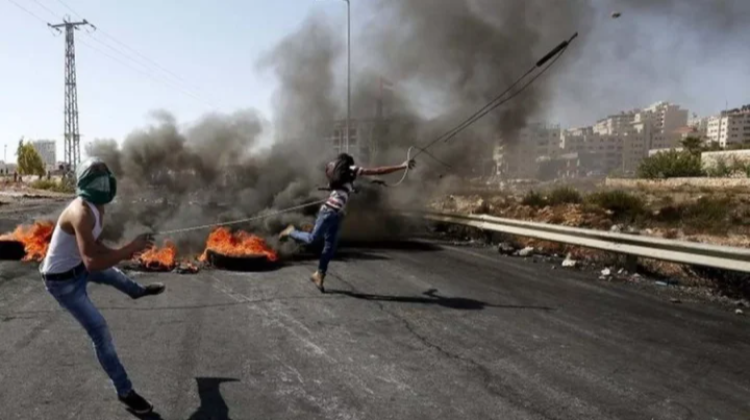
After the establishment of Israel in 1948, a resistance movement developed against their occupation in Palestine. Similarly, a resistance struggle began against the Soviet military intervention in Afghanistan in 1979. But these movements have often been presented as extremist or terrorist activities in the international media. Consequently, those whose lives and countries have been subjected to attacks have, in many cases, conversely received the 'terrorist' tag. After the Twin Towers attack in 2001, the 'War on Terror' was declared, and the so-called anti-terrorism campaign began to be spread globally. Yet Islam came specifically to eradicate all Fitnah (sedition/turmoil) and terrorism; thus, there is no place for extremism in this Deen. Islam commands Jihad against Fitnah. The fundamental principle of Islam is that there is no compulsion in this Deen (Surah Al-Baqarah 2:256). Islam does not impose any ruling of Shariah against anyone's will, nor does it force anyone to convert. Allah says He does not burden anyone beyond their capacity (Surah Al-Baqarah 2:286). He also says that unjustly killing one person is equivalent to killing the entire mankind (Surah Al-Ma'idah 5:32). One person cannot be punished for the crime of another (Surah Al-Isra 17:15). The purpose of Islam is to establish a way of life that will spiritually purify human beings and ensure peace and security by eradicating injustice from society.
On the other hand, observing the history of the last three hundred years, it can be said that the imperialist states' aggression and colonial mentality—aimed at looting natural resources, the sick competition to occupy foreign lands, and creating weapons markets—have given birth to extremism. Experts fear a massive increase in extremist activities in the entire region in response to the ongoing war of the United States and Israel with Iran.
Bangladesh is historically a tolerant state, where people of different religions have been living together in harmony for a long time. During the tenure of the past interim government, over six hundred incidents of mob violence occurred in Bangladesh; this resulted in massive damages and the loss of at least 320 lives (Bangladesh Pratidin: February 1, 2026). Attacks have taken place on various establishments and shrines in the name of religion. Even in the past, people of dissenting views have been hacked to death in our country, and sometimes horrific incidents like Holey Artisan have also occurred. Alongside this, extremism and communalism have been spread numerous times through mob terrorism committed by the so-called Tawhidi Janata.
To combat extremism, the government and the international community have primarily chosen the path of using force. Attempts have been made to eradicate it through police, laws, crossfire, hanging, and remand. But even after spending trillions and trillions of dollars, extremism could not be eradicated. This is because extremists consider their actions to be religious obligations. As a result, the more force is applied or punishment is given to deter them, the more their spirit of faith increases, and they become more reckless and tactical. Former UN Secretary-General Ban Ki-moon said that taking harsh measures has only increased militancy (The Daily Prothom Alo, January 17, 2016).
To overcome this situation, it is necessary to ideologically combat extremist ideology alongside the use of force. Extremists are misleading people by misinterpreting the Quran and Hadith and are issuing false fatwas to launch attacks on minorities and people of dissenting views. To counter this misinterpretation, a correct ideology and a strong counter-narrative must be presented before the nation. And this counter-narrative must be based on Islamic evidence. The extremist ideology must be refuted and proven wrong in the light of the Quran, Hadith, and history. When people learn about these, they will no longer be misled by the misinterpretations of the extremists; rather, they will follow the true teachings of Islam.
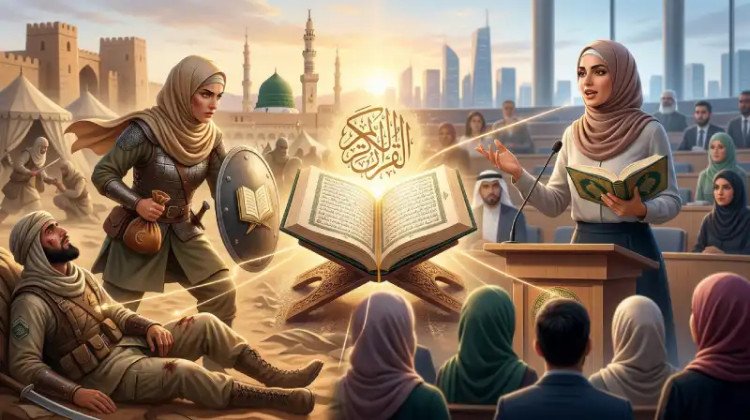
Since the Quran is a complete code of life, along with matters like prayer and fasting, it also contains necessary rules for the principles of war, penal codes, and the judicial system. However, various extremist groups misinterpret the verses of the Quran regarding Jihad, Qital (fighting), and Qisas (retribution) and use them in extremist activities. If we deny the verses of Jihad or Qital seeing these actions of theirs, or avoid discussing them, it will be a suicidal decision. Because of this, people might become Islamophobic and think that the Quran itself is perhaps the source or supporter of extremism.
To combat the ongoing extremism in the name of Jihad, we first need to know what the true meaning of Jihad is. Jihad means an all-out effort, struggle, and revolution to establish the truth. The comprehensive movement conducted at ideological, moral, and social levels against unjust and oppressive systems to establish Allah's true Deen is Jihad. And 'Qital' means war, which is the highest level of Jihad. The armed struggle that takes place to overthrow the existing systems of injustice and oppression in human society and establish the justice-based way of life given by Allah is called Qital. The contexts of Jihad and Qital are different. Jihad is a broad struggle that is conducted at group and social levels in various ways and completely selflessly. Speaking out to unite people in favor of truth, writing books, creating awareness through thought and logic, and building an ideological movement through meetings and gatherings—all these fall under Jihad. But Qital or war is not a matter subject to the will of any individual or group; it is a state matter. Qital cannot be waged without the permission of the head of state. The Messenger of Allah (PBUH) had started the struggle or Jihad to establish the truth since receiving Prophethood. But Allah gave permission for war only when he was established as the head of state of the city-state of Madinah. After that, he conducted wars with an organized army. Therefore, carrying out armed attacks or killings on personal initiative or by the decision of any group is completely illegal in Islam.
Similarly, as part of the court's judicial process, Allah has made the provision of Qisas mandatory in the Holy Quran (Surah Al-Baqarah 2:178). Qisas means taking equal retribution, such as a life for a life, equal injury for an equal injury, etc. (Surah Al-Ma'idah 5:45). When the state system of Islam is established, the judiciary will be formed under the leadership of the head of state. Judges will execute the punishment of the criminal by conducting investigations and taking witnesses, evidence, and confessions. If the plaintiff wishes, they can forgive the accused or accept the financial value of the damage. However, this decision will also be taken within the judicial procedure of the court. This kind of punishment cannot be executed upon the personal decision of any individual or Mufti.
In the Quran, Allah has clearly stated that those who do not judge according to the law revealed by Allah are Kafirs (disbelievers), Zalims (oppressors), and Fasiqs (rebellious) (Surah Al-Ma'idah 5:44, 45, 47). Elsewhere it is said, 'O you who have believed, fight those adjacent to you of the disbelievers and let them find in you harshness' (Surah At-Tawbah 9:123). Therefore, the people must clearly know who is a Mu'min (believer) and who is a Kafir. If this is not done, extremist groups can attack judges and lawyers using these verses based on the fatwas of their own Faqihs, Shaykhs, or Muftis.
However, to stop the spread of extremism, the use of force or propagating counter-ideologies is not enough; international understanding and strong policies are also necessary. People must be guaranteed their inherent and natural rights, the right to choose their own political stance and lifestyle, the right to protect their lives and wealth, and the right to live in their own land. The UN Charter also clearly mentions this Right to Self-Determination (Article 1(2)-1945).
This must be presented clearly and strongly across the entire Muslim world, and an important decision must be made. That is—Muslim states must be governed according to the state system given by Allah. Because the existing Western state system conflicts with the thinking of most devout people. Consequently, the clash and conflict between Islam and the Western system are creating division in society. For example, the interest-based capitalist economy, due to which economic disparity, syndicates, and inflation are increasing. Although Muslims consider interest (Riba) to be Haram (forbidden), they have to comply with it as the use of interest is mandatory in the state system. A protesting spirit is born among religiously believing Muslims against those systems which are contrary to the commands of Allah, which sometimes turns into extremism.
At the same time, the way Muslims are being humiliated and insulted in the international situation, if this continues, no matter how much force is applied, the rise of extremism cannot be stopped. To stop it, states must come to an understanding regionally and collectively take effective measures.
Images Related to this Post






Leave a Comment