
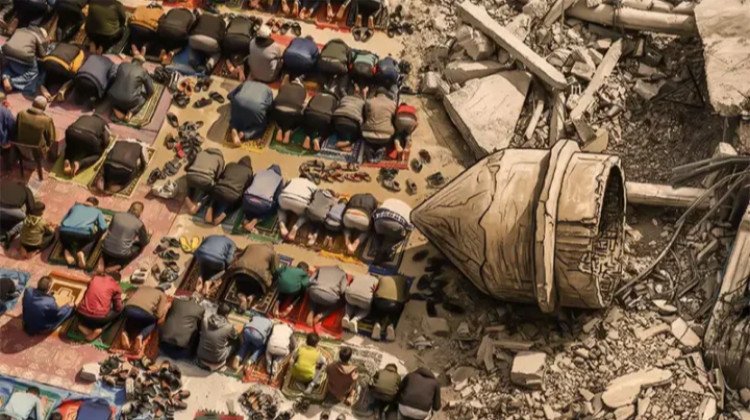
he Loss of Islam’s Core Creed: Islam Has Now Become Merely Ritualistic
-Sabikun Nahar Eva
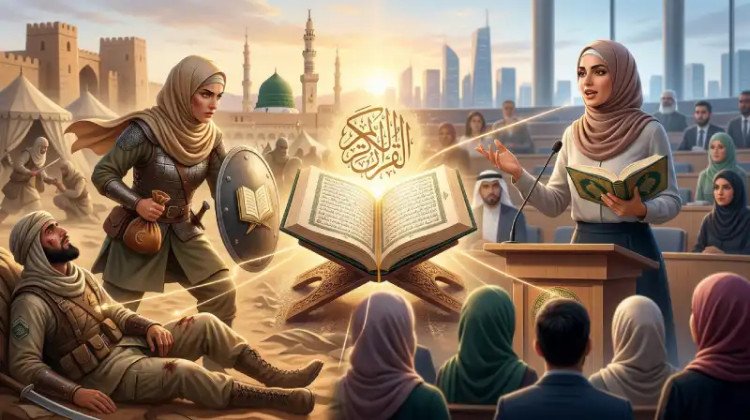
“We have heard from childhood that ‘Islam is a complete Deen (way of life).’” However, when we look at its practical application, we see that none of the aspects required for it to function as a comprehensive way of life exist in our society. Instead, Islam today has, like other religions, become largely a set of rituals. But a true Deen provides guidance for every aspect of life—from personal conduct to state governance—and Islam indeed contains such guidance. It provides clear directions on how humanity can live in peace, ensure justice, security, and fairness in society. Yet, despite living in countries where Muslims make up ninety percent of the population, we have abandoned Islam as a full Deen and run our societies and states according to human-made systems. As a result, peace, justice, and fairness are not established; rather, injustice, oppression, murder, robbery, and extortion continue to rise daily. To achieve true peace, we must abandon human-made systems and implement Islam not merely as a set of rituals, but as a complete Deen—governing according to Islamic principles in administration, justice, economy, and statecraft.
However, many of us lack proper understanding (Aqidah) of this complete form of Islam. Accepting Islam as a full Deen is a collective decision that requires awareness of its full scope. Today, we perform all Islamic acts—Salah, Zakat, Hajj, Sawm, etc.—with grandeur. Yet every one of these acts carries a specific Aqidah or purpose. Not understanding this Aqidah means our actions are incomplete. Scholars agree that if Aqidah is wrong, faith (Iman) is flawed, and if faith is flawed, even our actions become incorrect. Therefore, we must first understand the true purpose of Islam’s revelation.
The literal meaning of Islam is “peace.” Establishing Islam means establishing peace. People achieve peace only when their lives and property are secure. To understand Islam’s true purpose, we can analyze two historical incidents from the time of Allah’s Messenger (ﷺ):
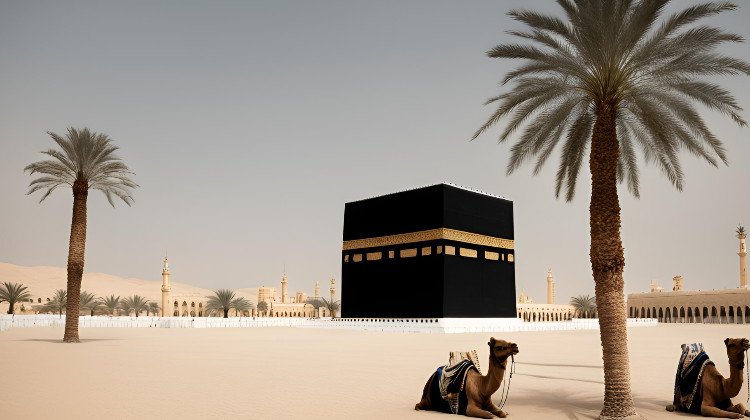
First Incident: One day, the Prophet (ﷺ) was leaning against the wall of the Kaaba during extremely difficult times, facing severe persecution. A companion, Khabbab (RA), said, “O Messenger of Allah! This oppression is unbearable. Pray to Allah to destroy our enemies!” The Prophet did not pray for their destruction but said, “Soon there will come a time when a young woman, wearing adornments, will travel alone from Sana’a to Hadramaut, and her heart will fear none except Allah.” [From Khabbab (RA), Bukhari & Mishkat]
Second Incident: Adi ibn Hatim (RA) narrates: One day he was with the Prophet (ﷺ) when a man complained of poverty, and another complained about highway robbery. The Prophet then said to Adi, “Have you seen Hira? If you live long, you will witness a woman traveling from Hira to Makkah and safely performing Tawaf around the Kaaba, with no fear in her heart except Allah.” [Bukhari]
From these two incidents, the purpose of Islam becomes clear. First, the Prophet (ﷺ) mentioned a woman, highlighting that in addition to life and property, women have honor, chastity, and dignity at risk—things men do not lose in the same way. Second, the woman was young, making her more vulnerable to temptation. Third, she was adorned with jewelry, which could attract thieves.
Despite these factors, Allah’s Messenger (ﷺ) assures that such a woman can safely travel hundreds of miles alone. The incidents also do not specify her religion or tribe—this safety is guaranteed for women of all religions and backgrounds.
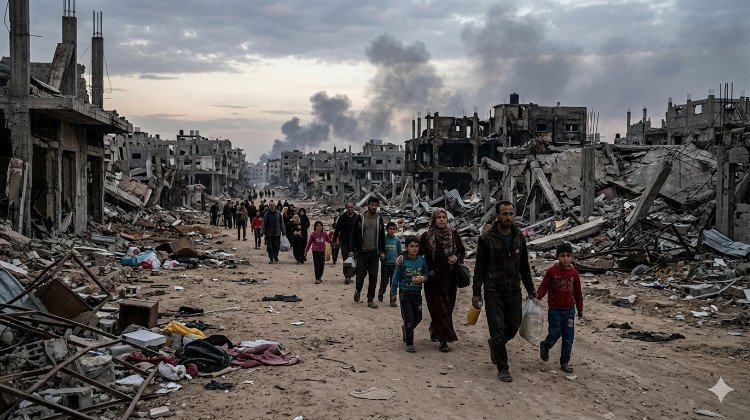
Yet, if we observe our surroundings today, we see insecurity and injustice even in our own countries. This demonstrates that Islam is not being properly practiced, and its establishment is absent. History proves that Islam ensured peace and security; if our society lacks these, the fault lies in our incorrect application and flawed Aqidah.
In conclusion, every Islamic act and worship has a specific Aqidah or purpose. Similarly, Islam itself has a comprehensive Aqidah and purpose. If we adopt Islam only as a ritualistic religion and seek personal satisfaction alone, that satisfaction is false. Even in countries with ninety percent Muslim populations, if peace and security are absent, corruption, bribery, extortion, theft, and insecurity prevail, and women live in constant fear—this indicates a fundamental flaw in belief and application.
Therefore, the safe, just society envisioned by our beloved Prophet (ﷺ)—where a woman could travel hundreds of miles alone without fear—can only be realized by implementing Islam in its full, comprehensive form in both state and society. Let us return from ritualistic practice to the original Aqidah and purpose of Islam. Only then will injustice disappear from society, and we will regain the long-sought peace and security, the existence of which history confirms and which our beloved Prophet (ﷺ) foretold long ago.
(Student, Eden Women’s College)
Images Related to this Post









Leave a Comment