

The present world and our beloved Bangladesh are going through a critical period. In our collective life, we have adopted a religion or system of life that is not divinely ordained but human-made. When a human-made system of life is established in society and the state instead of the system given by Allah, it becomes necessary to reject such a system entirely. The main reason for this necessity is that none of these prevalent human-made systems of life can provide humanity—or us—with peace, justice, and fairness.
Therefore, rejecting these human-made systems from collective life and establishing the divinely ordained religion or system of life is not only our supreme duty as believers but also an essential responsibility as conscious citizens to safeguard our existence, our families, and our homeland. In the current critical period, gradually establishing peace in the country and across the world through the implementation of Allah’s divinely ordained system of life is now a demand of the time. However, when the topic of establishing the religion is raised, many question the feasibility of this task. They wonder whether it is even possible to discard human-made systems and implement the flawless system provided by the Creator, and this thought makes them anxious.
This question, however, is highly reasonable because within the prevailing structures, there are certain factors that can act as obstacles to proposing a change in the system. In addition, there is the influence of international imperialist powers. Yet, all these complex structures persist because of us, and united efforts on our part can change them. But we have not yet reached a stage where we can launch such a united effort. The main reason is that, within the existing system, politicians’ use of religion as a tool for political gain has become the greatest obstacle to establishing the religion. Islam itself is a complete system of life, yet by using Islamic ideals for political purposes in human-made systems, its true essence has been obscured in the eyes of the people. Because of this “politics using religion,” people are unable to collectively stand against the prevailing systems as Islam dictates. Thus, this alone has become a major barrier to the establishment of the religion.
The Path of Establishing Islam in the Existing System vs. the Sunnah of Allah’s Messenger
Those in our society who are known as religious-based political parties have already presented a version of religious establishment to the public. They claim that they will establish Islam by gaining political power under the current system. However, even in their so-called “establishment of Islam,” they essentially merge Islamic laws with conventional laws to create a mixed and confusing system. Few realize the bitter truth that, rather than establishing Islam, this approach only further clouds the path to its implementation. If Islam could truly be established merely by gaining power under the existing system and applying its principles, why did the Prophet (ﷺ) not accept authority when it was offered to him? When his beloved uncle Abu Talib advised him not to propagate the eternal message of Tawheed, the Prophet’s (ﷺ) response was that even if the heavens and the sun were placed in his hands, he would not stop his mission. This incident, recorded in the book Sirat Ibn Ishaq, clearly demonstrates that although the leaders of Arabia offered him power and authority over all tribes, he refused and pursued the mission of establishing the divinely ordained system according to Allah’s command. Therefore, when the leaders of religious-based parties speak of establishing Islam after attaining political power, they are actually undermining it. People trust them with the hope of Islam being established, yet no real benefit occurs; rather, people fall victim to deception.
Historical Context: British Rule and the Two-Nation Theory
The issue of “politics using religion” by religious-based parties did not emerge suddenly but has roots in the British colonial period in the Indian subcontinent. When the British established their colonies in India, they prioritized exploitation over governance. In the course of two world wars and internal rebellions in India and other colonies, the British eventually granted what they called “independence,” but by then India had already been torn apart by communal violence. The principle of the “Two-Nation Theory” became the basis for the 1947 partition, which was itself inspired by Islamic sentiment. By forming religious-based parties and inspiring people with the notion of “Islam will be established,” the state of Pakistan was founded. Yet, when governance in Pakistan began to follow the administrative structures left by the British rather than the core Islamic principles, using religion for political gain became normalized—a trend that continues in Bangladesh to this day.
Use of Religion in Politics: Obstacle to Establishing the Religion
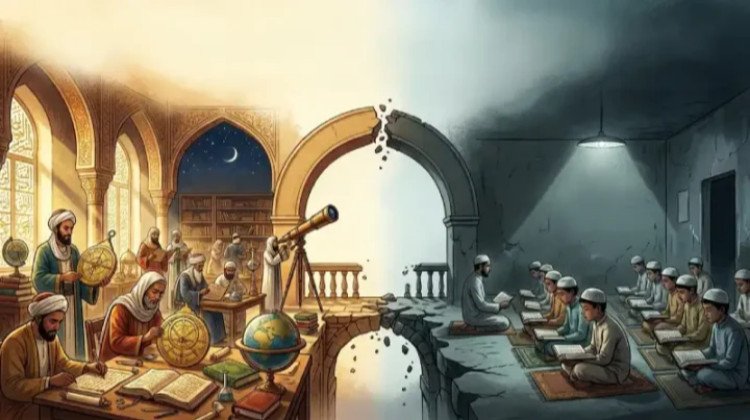
The greatest harm of using religion—particularly Islam in a Muslim-majority country like Bangladesh—as a political tool is that it obscures the true essence of the religion. Islam, a complete system of life bestowed by Allah through His Messenger, has been reduced to a worship-focused religion due to deviations in belief. One major reason people remain unaware of Islam’s comprehensive system is the colonial education system instituted by the British and its far-reaching conspiracies. Even after the British left, people did not come to know the true nature of the religion. Using religion as political capital has confined it to a personal sphere rather than its role as a complete system of life.
Moreover, religious-based parties do not provide an authentic interpretation of Islam. They have used Islam to achieve party interests, gain a few more votes in elections, and fulfill worldly desires. They don the garb of the Prophet (ﷺ) in electoral campaigns, make false promises, speak deceivingly, and engage in illogical rhetoric. People trust them based on this outward display, only to later suffer exploitation at their hands. Even if we overlook the fact that secular parties lack Islamic ideals and are thus corrupt, religious-based parties, while claiming to uphold Islam and donning the Prophet’s (ﷺ) appearance, commit the same corrupt practices once in power. This hypocrisy obstructs the path of genuine Islamic establishment, as people assume Islam will be implemented in this manner. This misconception further complicates the actual path to establishing Islam.
Global Instability and the Failure of Human-Made Systems
On a global scale, the failures of human-made systems are clear. The so-called developed world, in the name of democracy and human rights, caused more deaths in just two world wars than ever before in history. Later, so-called “progressive” Western imperialists fueled wars in the Middle East and across the globe for arms trade profits, causing widespread destruction. In every case, nations clung to their human-made systems of life, yet these systems failed to protect them from destruction. Therefore, reviewing these historical events confirms the failure of human-made systems. Observing our own country’s internal situation, any conscious reader can easily grasp this truth.
Thus, as we, Hezbut Tawheed, strive relentlessly to establish the religion, we also expose to the public the faults of politics that exploit religion for personal gain. We must now realize that if we truly want to establish peace in our society and state, we must implement Allah’s divinely ordained religion. To establish this religion, we must overcome the labyrinth of political manipulation of religion, which stands as the greatest obstacle. Only then will we attain real peace, ensure the safety of future generations, and secure a progressive and prosperous future.
Conclusion
It is evident that the culture of using religion as a political shield blocks the path to true liberation. When a group dons the garb of Islam but becomes part of the corrupt prevailing system, people develop doubts about the authentic form of the religion. Therefore, to truly overcome global instability and national crises, we must rise above this situation. We, Hezbut Tawheed, call upon everyone to embrace the truth. We must escape the deadly trap of political exploitation of religion. If today we fail to put aside all differences and escape this trap, our condition will soon resemble that of other utterly destroyed nations. We, Hezbut Tawheed, hope that you will accept this message and, through collective decisions, fulfill your role as conscious citizens in building the country and nation.





Leave a Comment