
A Roadmap for Establishing Human Rights & Freedom of Speech

-Dr. Mahbub Alam Mahfuz
At present, whether in developed or underdeveloped countries, a state of extreme instability prevails across the world. Powerful nations are dominating weaker ones—attacking and occupying them. Within states, conflicts over power, political differences, and religious issues are leading to violence. Globally, it appears as though there is a brutal festival of human rights violations and suppression of freedom of speech. The UN Secretary-General António Guterres acknowledged in 2023, regarding the Palestine issue, that “the protection of human rights worldwide is facing serious challenges, and the failure of the global system to safeguard human rights has become evident.”
It has been nearly eighty years since the British left. In 55 years of independence, there have been numerous movements, uprisings, government changes, revolutions, and constitutional reforms—yet human rights, freedom of speech, and justice have not been ensured. Millions of cases remain pending in courts; people wander in search of justice but do not receive it. Mob violence is occurring regularly from rural areas to parliament and secretariat levels. Political differences are endangering lives. Religious and ideological minorities are being oppressed by majorities.
However, such a situation cannot continue indefinitely. Humans have been created by Almighty Allah as His representatives (caliphs) on earth. Therefore, it is humanity itself that must resolve this crisis. Intellectual circles are thinking, researching, and discussing extensively, yet no clear solution has emerged. We assert that there is a path forward. If we can abandon man-made systems and unite under the consciousness that we are all creations of one Allah, children of one pair of parents, and members of one family—then only through obedience to Allah can peace be established. If we can implement the life system given by Allah, human rights violations and suppression of free speech will cease.
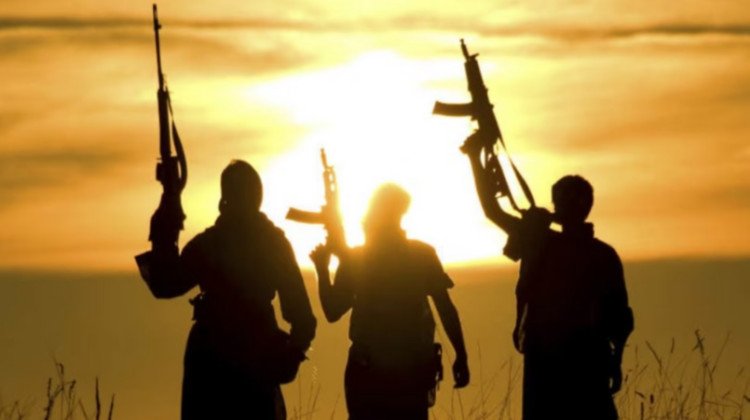
The root cause of human rights violations is extremism. Observing ancient, medieval, and modern history, we see that almost every major religion has developed extremist groups among its followers. Not only religion, but ideologies such as democracy, socialism, and nationalism have also given rise to various forms of terrorism. However, in our context, extremism in the name of Islam has become a major crisis.
Today, in Europe and various Western media, Islam is often portrayed as a source of extremism. Examples cited include organizations such as Al-Qaeda, ISIS, Taliban, Lashkar-e-Taiba, Al-Shabaab, and Boko Haram. In reality, these groups emerged from specific political contexts. Centuries ago, European powers subjugated the Muslim world through military force, dividing regions and exploiting them under the guise of delivering “civilized humanity.” Later, they themselves caused two world wars, killing nearly 150 million people. Although many countries gained independence after World War II, political instability, internal conflicts, weak governance, and economic fragility persisted, along with continued interference by former colonial powers and global superpowers.
Following the establishment of Israel in 1948, resistance movements arose in Palestine. Similarly, resistance began in Afghanistan after the Soviet invasion in 1979. However, such movements have often been portrayed in international media as extremist or terrorist. As a result, victims of aggression have sometimes been labeled as terrorists. After the 2001 Twin Towers attack, the “War on Terror” was declared, spreading globally. Yet Islam itself came to eliminate chaos and terrorism; extremism has no place in it. Islam commands struggle against injustice. Its core principle is that there is no compulsion in religion (Qur’an 2:256). Islam does not force its laws on anyone nor compels conversion. Allah does not burden anyone beyond their capacity (2:286). Killing one innocent person is like killing all humanity (5:32). No one bears the burden of another (17:15). Islam aims to establish a system that purifies individuals spiritually and ensures justice and peace in society.
Conversely, over the past three centuries, imperialist aggression—driven by competition for resources, territorial expansion, and arms markets—has contributed significantly to extremism. Experts warn that ongoing conflicts involving the United States, Israel, and Iran could further intensify extremism in the region.
Bangladesh has historically been a tolerant society where people of different religions have coexisted peacefully. However, during the recent interim government period, over 600 mob incidents occurred, resulting in at least 320 deaths (Bangladesh Pratidin, February 1, 2026). Attacks have been carried out in the name of religion, including assaults on shrines. There have also been brutal killings of dissenters and incidents like the Holey Artisan attack. Mob violence driven by extremist sentiments has fueled communalism.
Governments and the international community have primarily relied on force—policing, laws, extrajudicial killings, executions, and detentions—to combat extremism. Yet despite trillions spent, extremism persists. This is because extremists see their actions as religious obligations. Increased punishment often strengthens their resolve. Former UN Secretary-General Ban Ki-moon noted in 2016 that strict measures have, in some cases, worsened extremism.
To overcome this crisis, force must be combined with ideological countermeasures. Extremists misinterpret the Qur’an and Hadith to justify violence and issue false rulings. A strong, evidence-based counter-narrative grounded in authentic Islamic teachings is essential. By exposing these misinterpretations through scripture and history, people can be guided toward the true teachings of Islam.
The Qur’an provides guidance not only on worship but also on law, justice, and warfare. Extremists misuse verses related to jihad, combat (qital), and retribution (qisas). Ignoring these verses or denying them would be dangerous. Instead, their correct meanings must be clarified.
Jihad means striving or struggling for truth through all means—intellectual, social, and moral. Qital (armed combat) is the highest form of jihad but is strictly a state matter, not for individuals or groups. The Prophet Muhammad (peace be upon him) engaged in armed struggle only after establishing a state in Medina. Therefore, unauthorized violence or killings are completely prohibited in Islam.
Similarly, qisas (retaliation) is a judicial process involving investigation, evidence, and court rulings. Punishments cannot be carried out by individuals or clerics independently.
The Qur’an emphasizes justice under divine law and calls for clarity in distinguishing belief systems. Misuse of such verses by extremists can lead to attacks on institutions like courts and legal professionals.
Beyond ideological reform, international cooperation and strong policies are necessary. Fundamental rights—such as self-determination, political freedom, security of life and property—must be ensured. These are also recognized in the UN Charter (Article 1(2), 1945).
In the Muslim world, a major decision must be made: to govern according to divine principles. The current Western systems often conflict with religious values, creating tension. For example, interest-based economic systems contradict Islamic teachings, leading to inequality and dissatisfaction, which can fuel extremism.
Finally, unless global injustices and the humiliation of Muslim populations are addressed, extremism cannot be eliminated through force alone. Regional cooperation and collective action are essential to achieving lasting peace.
Images Related to this Post




Leave a Comment