
Limitations of Conventional Democracy and Islam’s Eternal Solution
-Imon Hasan Durjoy
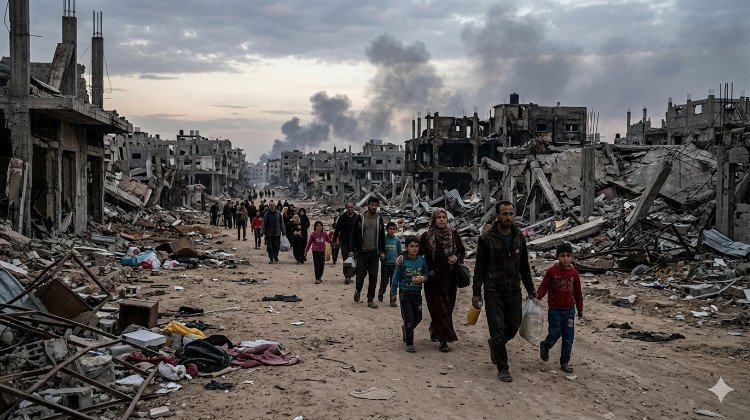
The contemporary world is experiencing extreme instability. On one hand, science and technology are celebrated as triumphant; on the other hand, humanity and human values are being eroded. All of humankind cries out in despair due to the lack of peace and security. The most praised system of the modern world, democracy, has failed to provide humanity with peace, security, justice, and liberation.
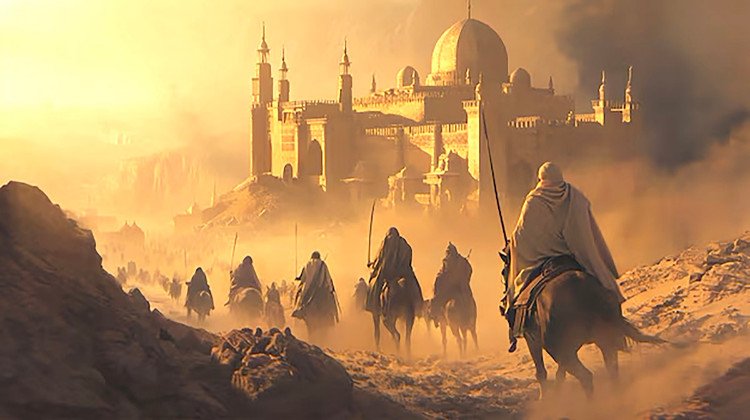
Does this mean democracy as a system has failed? If democracy cannot bring peace to humanity, is there an alternative system through which true societal peace can be established? The only comprehensive system capable of achieving this is Islam. History bears witness: through the true practice of Islam, peace, justice, and fairness were established in Arabia, creating a flourishing and serene society, like a green oasis in a desert. Therefore, the only path to humanity’s true liberation today is Islam.
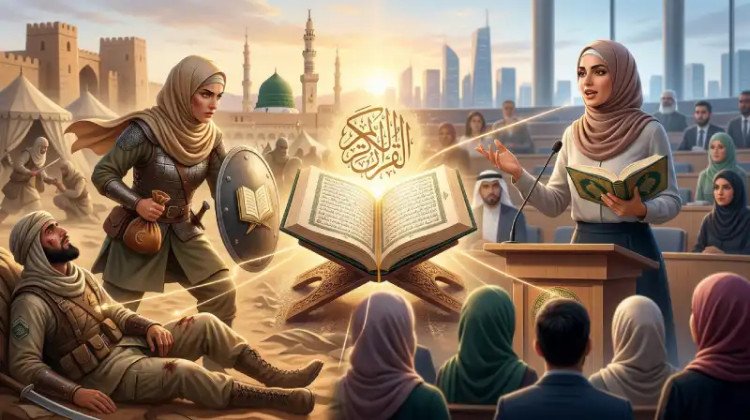
A comparative analysis of the two systems shows that conventional democracy deprives us in almost every way. Democracy’s fundamental principle is “rule by the people,” where the majority’s opinion prevails. Here, the opinions of both the wise and the ignorant are weighed equally, which is clearly irrational. Justice becomes extremely difficult to achieve because fairness is measured by the number of supporters, not by eternal principles. In Islam, the criteria of justice and injustice are clearly defined: Allah’s commands and the Holy Qur’an form the foundation of justice and moral law. Thus, in Islam, it is not the majority but the supreme eternal authority, who is just and merciful, that governs. In this sense, Islam is more modern and rational than democracy.
Moreover, the moral crisis in conventional democracy is widespread. In democracy, accountability rests with the people. But with such large populations, most of whom are busy with family and livelihood, monitoring accountability is neither practical nor reasonable. In Islam, accountability lies directly with Allah. Leaders or rulers are answerable to Allah, and fear of divine retribution prevents them from committing injustice. This moral consciousness ensures that they stand against oppression and remain submissive to justice and truth. Hence, Islam produces better leaders and ensures accountability, unlike democracy.
Democracy also emphasizes public opinion for leader selection but rarely verifies the actual qualifications required to lead. Candidates typically need only popular support or signatures from the area. As a result, influential individuals dominate leadership positions, while the truly qualified are deprived. Islam, however, supports qualified leadership. People have the right to select leaders, and Islam fully endorses this. Moreover, Islam ensures everyone has the opportunity to become a leader, while also instilling moral responsibilities. The history of Islam’s Golden Age provides numerous examples of this ethical leadership.
For example, the second Caliph of Islam, Hazrat Umar (RA), said: “If even a dog dies of hunger on the banks of the Euphrates, I, Umar, shall be accountable to Allah.” Can any modern democratic leader today make such a statement? His declaration was not an emotional gesture but the foundation of his governance. While contemporary leaders indulge in luxury with public funds, Hazrat Umar (RA), the ruler of half the world at that time, lived simply and vigilantly, personally ensuring the welfare of the people. Such qualities can only be cultivated through Islam; no other system guarantees them.
Another major issue in democracy is political factionalism under the guise of freedom. Parties often divide the nation before attaining power, obstructing progress and causing conflicts or riots. If one party remains in power for five years, opposition parties spend their time attempting to remove it, hampering development and public welfare.
In Islam, such divisions are impossible. Once a leader is elected according to the people’s choice, obeying the leader is obligatory. There is no room for factionalism or forming competing groups. If the leader fails in ensuring justice, peace, or fairness, responsibility is properly transferred. While democracy is fragmented, chaotic, and self-serving, Islam is united, organized, and principled. Hence, the Islamic system is superior to democracy.
Regarding economics, capitalism and interest-based systems exacerbate wealth inequality: the rich get richer, and the poor become poorer. In contrast, Islam promotes an interest-free economy and equitable distribution, encouraging the circulation of wealth rather than hoarding, benefiting the whole society. History testifies that Islamic economic principles once created a society where finding someone eligible to pay Zakat was almost impossible. Thus, as a system of life, Islam is superior and fully relevant in every aspect compared to conventional democracy.
In conclusion, while the modern world has made unprecedented scientific and technological advances, it has failed to ensure human security and inner peace. History proves that any human-made system ultimately serves selfish interests and exploitation. Especially in conventional democracy, where numerical majorities often override justice and divide society, true peace can only come through adopting Allah’s comprehensive life system—Islam.
Therefore, to repeat history, establish peace, justice, and fairness, and restore human rights, humanity must embrace the final divine system—true Islam. Otherwise, conventional democratic societies will destroy the path to liberation, plunging nations into darkness. The time for this decision is now.
Images Related to this Post



Leave a Comment